


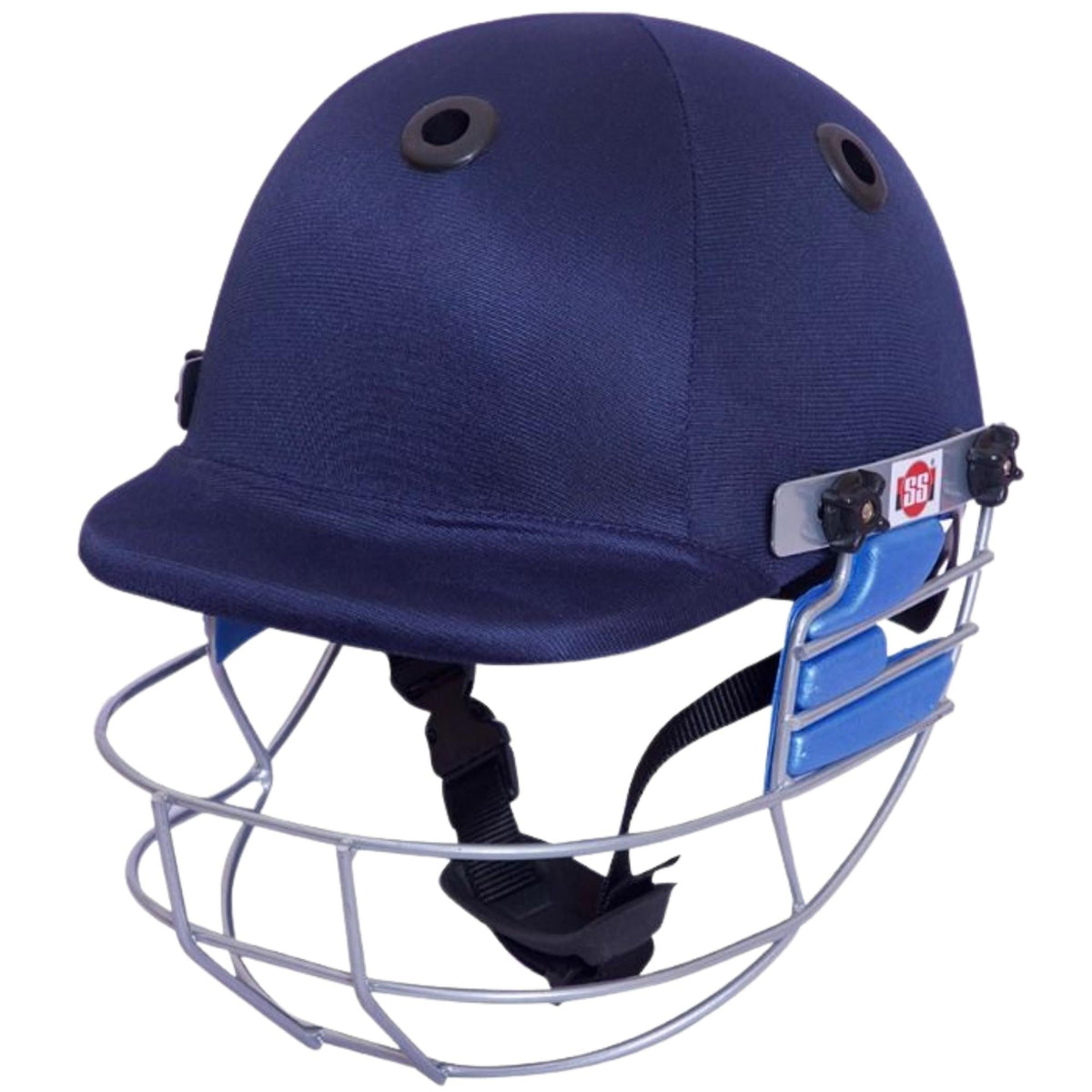
Cricket Helmet Size Chart and Fitting Guide
A cricket helmet is the most important piece of protective equipment a batter owns, and it only protects properly when it fits. A loose helmet can shift on impact; a tight one is uncomfortable and distracting. This guide explains how to measure your head, how cricket helmet sizes work, and how to check the fit before you face a ball.

How to measure your head
- Use a soft tape measure.
- Wrap it around the widest part of the head, about 1 cm (roughly half an inch) above the eyebrows and ears, and around the back.
- Keep the tape level and snug, not tight.
- Measure twice and use the larger figure, in centimetres.
Measure with what you wear
If you bat with a skull cap or bandana under the helmet, wear it while measuring.
Cricket helmet size chart
Helmet makers use their own size names and circumference ranges, so always check the chart on the specific product. The table below shows the kind of ranges commonly used and is a guide only.
| Size label | Head circumference (approx.) | Typical wearer |
|---|---|---|
| Extra Small / Junior | Below ~54 cm | Younger juniors |
| Small | ~54–56 cm | Older juniors, smaller adults |
| Medium | ~56–58 cm | Many adults |
| Large | ~58–60 cm | Adults |
| Extra Large | ~60 cm and above | Larger adults |
If you are between sizes, try both if possible. A helmet that can be adjusted down securely is better than one that is too small.
How a cricket helmet should fit
The fit checklist
- Snug, not tight: no pressure points after a few minutes.
- Level: the peak sits just above the eyebrows, not tilted back.
- No movement: shake your head side to side and nod. The helmet should move with your head, not independently.
- Chin strap: fastened, with room for roughly one finger underneath.
- Vision: a clear view of the bowler in your stance, through the gap between peak and grille.
Grille and gap
The gap between the peak and the grille affects both visibility and protection. Many modern helmets are designed so the gap cannot be adjusted wide enough for a ball to pass through. Never alter or remove grille parts, and follow the manufacturer's guidance on adjustment. Look for helmets that state compliance with a recognised safety standard on their product details where that matters for your league.
Replace after big impacts
A helmet that has taken a significant blow may be compromised even if it looks fine. Follow the manufacturer's guidance on replacement.
Sizing helmets for kids
As with bats, do not buy a size up for a child to grow into. A loose helmet is unsafe. Measure each season, and check that pads and adjusters still hold the helmet firmly.
Helmets to explore

DSC Cricket Batting Helmet Edge Pro
A batting helmet from DSC; see the product page for available sizes.
View productBrowse the full head gear collection.
Caring for your helmet
- Air-dry pads after each session.
- Store away from direct heat and sunlight.
- Inspect the shell, grille, and fixings regularly.
- Do not sit on, throw, or drop the helmet.
Choosing the right helmet beyond size
Shell material
Helmet shells are typically made from tough plastics or composites. Product listings describe the specific construction; compare these alongside fit.
Grille material
Grilles commonly come in steel or titanium. Titanium is generally lighter, while steel is often more affordable. Our range includes helmets listed with stainless steel and titanium grilles, so check the product title and description for the grille type.
Ventilation and comfort
Long innings in summer heat make airflow and padding important. Removable, washable pads are a practical feature for regular players.
When to wear a helmet
Wear a helmet whenever batting, wicket-keeping up to the stumps, or fielding close in against a hard ball. Many leagues and junior programs require helmets for batters and close fielders, so check your league rules. For tennis ball cricket, helmets are less common, but always follow the rules of your competition.
Players who wear helmets regularly should also consider other protective equipment. Explore our cricket pads and cricket gloves collections, and read our guide to choosing the right size cricket gloves.
Trying on in person
If you can, try a helmet with your batting stance and look up as if at a bowler. Any slipping over the eyes means it is too large.
Common helmet-buying mistakes
- Guessing the size. Always measure; do not assume your cap size or a friend's helmet size applies.
- Buying big for a child to grow into. Fit for today and re-check every season.
- Leaving the chin strap loose. An unfastened strap lets the helmet move on impact.
- Using a damaged or very old helmet. Cracks, bent grilles, or worn padding reduce protection.
- Modifying the grille. Never bend, drill, or remove grille parts.
A well-fitted helmet should feel like part of your head. Once you are used to it, you should barely notice it while batting, which lets you focus fully on the ball.
Fitting checklist before your first innings
- Measure your head and choose a size from the product's chart.
- Adjust any internal fit system so the helmet sits level and snug.
- Fasten the chin strap with about one finger of space.
- Take your stance and confirm a clear view of the bowler.
- Shake and nod your head: the helmet should not shift.
- Wear it in a net session before a match to make sure it stays comfortable over time.
If anything feels wrong at any step, try the next size or a different model rather than making do.
Final word on fit
Size charts, measurements and checklists all point to the same goal: a helmet that stays exactly where it should when the ball arrives. Take the time to measure properly, compare the chart on the product page, and test the fit in your stance. That small effort before buying is the best protection you can give yourself or your child at the crease.
Frequently asked questions
How do I know my cricket helmet size?
Measure your head circumference about 1 cm above the eyebrows and compare it with the product's size chart.
What size cricket helmet for a 12-year-old?
It depends on head size, not age. Measure the head and use the chart; many juniors fall in the Junior or Small range.
Should a cricket helmet be tight?
It should be snug and stable without painful pressure points.
Can I wear a cap under my helmet?
A thin skull cap or bandana is common. Measure while wearing it so the fit stays correct.
When should I replace my helmet?
After a significant impact, if any part is damaged, or as advised by the manufacturer.
Protect your most important asset. Find the right fit.
Shop cricket helmets and head gear
Leave a comment
This site is protected by hCaptcha and the hCaptcha Privacy Policy and Terms of Service apply.