


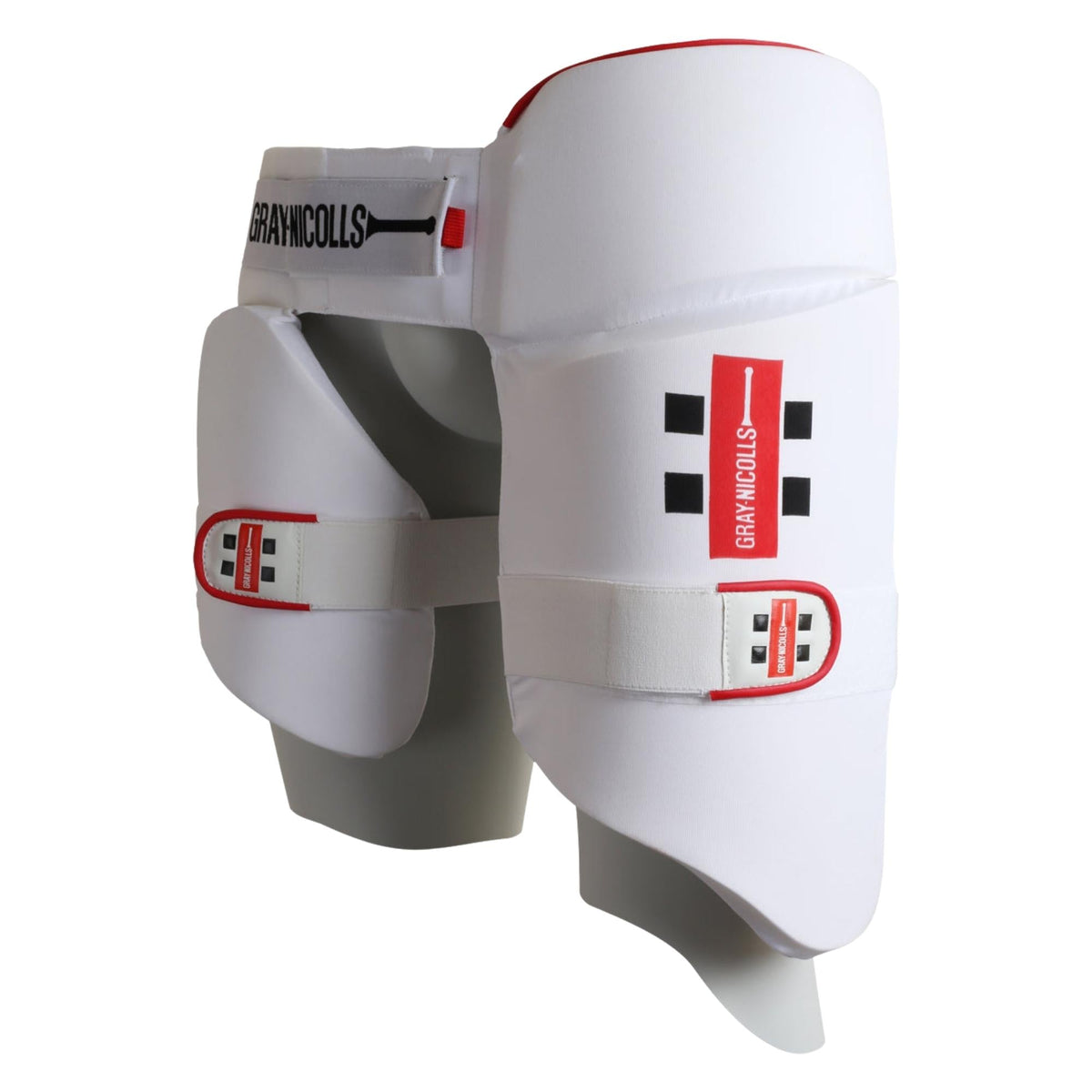
Cricket Protective Guards Explained: Box, Thigh, Arm and Chest
Beyond helmet, pads and gloves, batters rely on a set of smaller guards that cover the areas a hard ball most often hits. This guide explains each one, where it is worn and who needs it.

The guards at a glance
| Guard | Protects | Worn on | Who needs it |
|---|---|---|---|
| Abdominal guard (box) | Groin | Inside a jockstrap or supporter | Every batter, keeper and close fielder |
| Thigh pad | Front thigh | Front leg (left for right-handers) | All batters facing a hard ball |
| Inner thigh pad | Back-leg inner thigh | Back leg | Batters wanting extra cover |
| Arm guard | Forearm | Front arm (left for right-handers) | Batters facing quicker bowling |
| Chest guard | Ribs and chest | Front side of chest | Batters facing short-pitched pace |
| Leg guard | Shins and knees | Both legs | Another name for batting pads |
Abdominal guard (box)
Yes, cricketers wear a cup. Known as a box or abdominal guard, it is non-negotiable for batters, wicket-keepers and close fielders facing a hard ball. It sits in a supporter, jockstrap or compression shorts with a pouch so it stays in place when you run. Choose one that matches your size and sits flush without gaps.
Comfort tip
Compression shorts with a built-in pouch hold the guard more securely than loose underwear.
Thigh pads
The front thigh is regularly hit by deliveries that beat the bat. Thigh pads strap to the front leg, under the trousers. Double or combination thigh pads add an inner-thigh guard for the back leg, joined by a strap.

Arm and chest guards
Arm guards strap to the front forearm, the arm most exposed to rising deliveries. Chest guards protect the ribs on the front side. Both are optional and most useful against quicker bowling on bouncy pitches.
Sizing and fit
- Guards should stay put when you run and turn.
- Straps should be snug, not cutting in.
- Junior players need junior sizes; adult guards on children leave gaps.
Where to find them
Browse adult thigh pads, youth thigh pads and all accessories.
Choosing a protection level
The pace and bounce you face should drive how much protection you wear. Junior and club batters facing gentle pace often need only a box and thigh pad alongside pads, gloves and helmet. As bowling quickens, an arm guard becomes valuable, because the front forearm is exposed when you fend at short deliveries. Batters regularly facing genuine pace on lively pitches may add a chest guard and inner-thigh protection.
Comfort matters as much as coverage. Protection you find bulky tends to get left in the bag. Try guards on together with pads and trousers, take your stance, and run a few steps. Everything should stay in place without straps digging in. If a combination thigh system feels better than separate pieces, that is a perfectly sound choice.
Caring for guards
Wash abdominal guards and supporters regularly with mild soap. Air-dry thigh, arm and chest guards after each session, and check straps and elastic for wear. Replace any guard with cracks in its shell, since a damaged guard may not spread an impact properly. Keep junior guards under review each season as children grow.
Start with the essentials
If budget is limited, prioritise helmet, pads, gloves, box and thigh pad before optional extras.
Guards for wicket-keepers and close fielders
Wicket-keepers stand directly in line with the ball, so an abdominal guard is essential, along with keeping pads, gloves and inners. Keepers standing up to the stumps for spin should also wear a helmet. Close fielders such as short leg and silly point face hard shots at very short range; most leagues and coaches expect them to wear a helmet and box, and many add shin guards.
Fitting a thigh pad correctly
- Strap the thigh pad to the front leg before putting on trousers, or use shorts with a pocket designed to hold it.
- Position it to cover the front and inside of the thigh, from just above the knee pad's top to the upper thigh.
- Tighten the straps so it does not slip when you run.
- For combination pads, place the inner-thigh section on the inside of the back leg.
Take a stance and play a few shadow shots; nothing should shift.
Protection for juniors
Junior protective gear should be sized to the child, not handed down from an adult. Abdominal guards come in junior sizes, and youth thigh pads are shorter and narrower. Correct sizing keeps guards in place and leaves no gaps. Many junior programs require a helmet, pads, gloves and box for hard-ball batting.
Box sizing
Abdominal guards are usually sold in sizes from small youth to adult. Choose by waist size or age band per the product's listing.
Guards at a glance by role
| Role | Essential | Recommended |
|---|---|---|
| Batter vs hard ball | Helmet, pads, gloves, box, thigh pad | Arm guard, chest guard |
| Wicket-keeper | Keeping gloves, inners, keeping pads, box | Helmet when standing up |
| Close fielder | Box, helmet | Shin guards |
| Tennis-ball cricket | None required | Depends on league rules |
Building your protective set
Buy protection in order of risk. The box comes first for every batter, keeper and close fielder. A helmet comes next for anyone facing a hard ball. Pads and gloves follow, then a thigh pad. Arm and chest guards complete the set for players facing faster bowling. Check every item for fit together, since guards that clash with each other become uncomfortable and tend to be left out.
Browse all cricket pads and helmets and head gear to complete your kit.
Quick answers on guards
Do women cricketers wear abdominal guards?
Yes, female-specific abdominal guards are available and recommended for hard-ball batting and keeping.
Is a chest guard necessary?
Not for most club players; it is useful against fast, short-pitched bowling.
Can I wear a thigh pad under tracksuit trousers?
Yes, as long as it is strapped securely.
How long do guards last?
Replace any guard that is cracked, compressed or no longer fits.
Comfort tips
Wear guards in practice before matches so you get used to them. Adjust straps so they are snug without restricting movement, and replace worn elastic. Compression shorts with pockets keep thigh pads and boxes secure.
Frequently asked questions
What is an abdominal guard in cricket?
A hard protective cup, also called a box, worn over the groin inside a supporter.
Do cricket players wear cups?
Yes. Batters, wicket-keepers and close fielders wear an abdominal guard.
Which leg does a thigh pad go on?
The front leg: the left thigh for a right-handed batter, the right thigh for a left-hander.
What is a leg guard in cricket?
Another name for batting pads, which protect the shins and knees.
Do I need an arm guard?
It is optional, most useful against fast bowling.
Complete your protection.
Shop thigh pads
Leave a comment
This site is protected by hCaptcha and the hCaptcha Privacy Policy and Terms of Service apply.